Addiction treatment takes many forms. Treatment specialists don’t take a blanket approach because they understand that each person seeking help needs individualized care. Of course, maybe you’ve heard of alternative therapies and wondered how they work. In other words, what is a holistic approach to addiction treatment?
The Mind-Body Connection
To better understand the impact addiction has on a person, you must know that it affects much more than a user’s body. Drug and alcohol abuse will take a toll on someone physically, but it also takes a toll mentally. For example, depression and anxiety are just two psychological effects of drug use.
When people enter rehab, they’re not only there to detox and heal their bodies. Of course, their minds must heal as well. That’s how they become truly healthy again.
What Is a Holistic Approach to Addiction Treatment?
Addiction treatment includes various therapies, such as psychotherapy and behavioral therapy. Through talk therapy, rehab Clients gain valuable insight into their addiction and how to overcome it.
What is a holistic approach to drug and alcohol addiction treatment? Holistic therapy, also known as alternative therapy, takes an integrated approach to whole-body health. These treatments focus on the connection between the physical, spiritual, as well as the mental aspects of each person.
The types of holistic therapies you may find in rehab include:
- Meditation
- Yoga
- Pilates
- Massage
- Biofeedback
- Art and music therapy
Other holistic treatments include nutrition therapy or simply hiking through the woods.
How Rehab Facilities Include Holistic Care
What is a holistic approach to rehab, and do all treatment centers take it?
The extent of holistic addiction treatment that a rehab facility offers differs from center to center. Of course, if this type of therapy is important to you, make sure you choose a facility that provides it.
With more people interested in alternative medicines and practices, more treatment centers are now offering holistic therapy. Many of them use it alongside more traditional therapeutic practices, with good results.
The best thing about holistic practices is that you can continue using them after leaving rehab. Once you return home, you can take what you learned during treatment and apply it to your ongoing recovery.
Change Begins Today
If you’re ready to give yourself the second chance you deserve, Driftwood Recovery is here for you. Our addiction and pain rehab center sits on 85 expansive acres of Texas ranch land, giving you the peaceful surroundings you need to begin recovery.
The dedicated professionals at Driftwood provide support and guidance through individual and group therapy. We help Clients with a range of therapies, such as cognitive behavioral therapy and EMDR therapy.
We also offer enjoyable amenities, such as:
- Aquatic therapy
- Fitness therapy
- Nutritional therapy
- Biking
- Kayaking
- Yoga therapy
- Meditation
You can make a positive change in your life by calling us today. With our help, you can break free of drug and alcohol addiction, for good. Call Driftwood Recovery at 866-426-4694 today.
Spotting the signs of drug addiction can be tough unless you know what to look for. The descent into drug abuse can be gradual, meaning it isn’t always easy to catch the signs. While drug use may not pose much of a problem at first, it can eventually take over a person’s life. This makes noticing the signs and taking action important.
Taking note of the signs of drug addiction in yourself can be nearly impossible. They can also be easy to downplay or ignore in a loved one. Learning the signs can be a huge positive step in the fight against drug addiction.

Beginning Signs of Drug Addiction
The early cues of abuse can be some of the most difficult to spot. At this point, drug use is beginning to become a larger part of the person’s life. They may become less reliable and start to blow off commitments. Their priorities shift from their life to their drug of choice.
Another early sign is excessive risky behavior. The person may care less about laws and their safety. They may drive a car under the influence of drugs or use an unsanitary needle.
While these signs may not be dangerous in the short-term, over time they can develop into significant issues. Catching these signs early enough can make all the difference in a person’s life.
Long-Term
If an individual delves into long-term addiction, the signs of drug addiction become more clear. They also create significant issues within a person’s daily life. For example, if early risk-taking is allowed to continue, the individual can also run into legal trouble. From driving under the influence to disorderly conduct, addiction can lead to serious problems with the law.
Probably most apparent are the physical changes drug addiction causes. Weight loss and skin issues can render a person almost unrecognizable.
These physical changes represent serious health issues that develop underneath the surface. These health problems include:
- Sleep and appetite changes
- Slurred speech
- Confusion
- Tremors
- Blackouts
- Coordination impairments
- Seizures
Ultimately, drug addiction can be fatal. Effective treatment can make all the difference in turning an individual’s life around.
How Driftwood Recovery Can Help
Driftwood Recovery has the resources and expertise to guide you through the recovery process. Deciding to seek help is an act of courage, and we are prepared to help. Our staff of trained professionals is ready to help you find which of the addiction therapies you need for your drug addiction recovery.
If you’ve noticed the signs of drug addiction in yourself or a loved one, Driftwood Recovery is here for you. When you begin to notice addictive behaviors within your loved one, the time to call is now. Reach out to Driftwood Recovery today at 866-426-4694 to learn more about behavioral therapy and other therapy options.
You may not know many facts about meth. While you might know that it’s addictive, do you know how dangerous meth use can be? Every year, tens of thousands of people visit hospital emergency rooms for meth-related reasons. Stroke, visual impairment, and death can all result from meth abuse. However, these are far from the only startling facts about the drug.
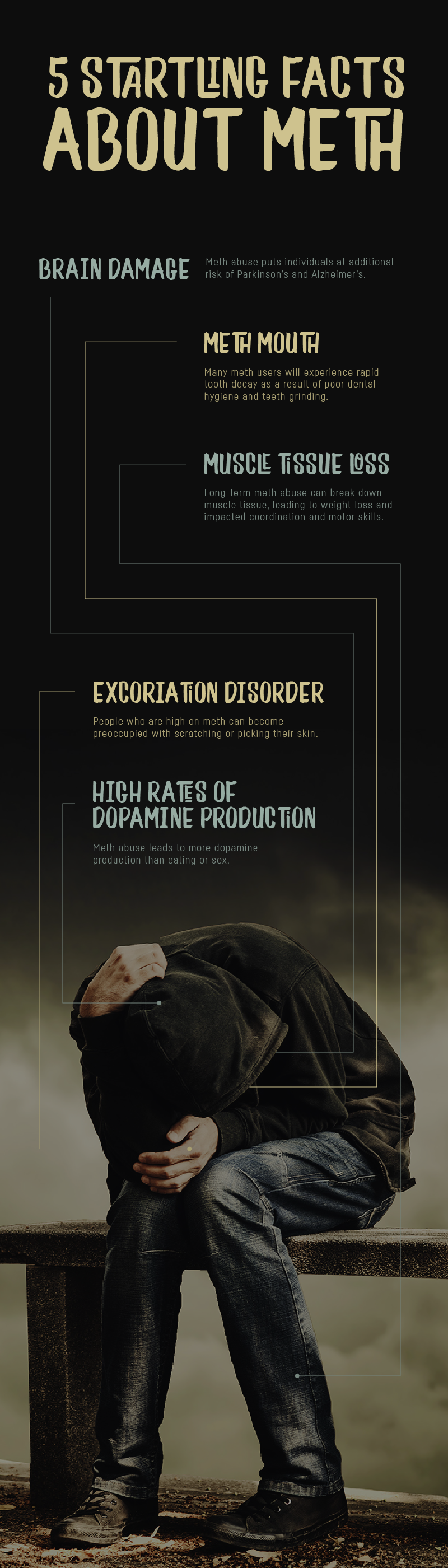
5 Startling Facts About Meth
Not all meth use is illicit. In fact, pharmacy-grade methamphetamine can help people with obesity or attention deficit disorders. It’s the illegal form—crystal meth—that users are more familiar with.
Some surprising facts about meth include:
- Known as “meth mouth,” many users begin to lose their teeth at a rapid rate as a result of neglected oral hygiene.
- Long-term use can lead to skeletal muscle tissue loss, which may explain why someone who’s abused the drug for a long time can have motor and coordination issues.
- It causes brain damage similar to stroke and Alzheimer’s sufferers.
- Meth use may increase the risk of developing Parkinson’s disease, according to some studies.
- It causes a much higher dopamine release than sex or food. This can explain why it’s so addictive since people find meth use more pleasurable than anything else.
Overcoming Addiction
Whether you became addicted after just one hit or you developed a dependency over several months, meth effects can be extremely damaging. Getting treatment for addiction is crucial. Rehab can save your life or the life of a loved one.
The momentary high will quickly lead to depression, anxiety, and confusion. Some users experience paranoia and psychosis.
None of the negative effects of meth use are worth that short-lived high. They’re also not worth the damage done to your body or family relationships. If you know someone with a meth addiction, it’s vital to encourage him to get into rehab. If you’re the one with a drug or alcohol dependency, it’s not too late.
A Full Continuum of Addiction Treatment
Driftwood Recovery is a drug and alcohol addiction treatment center in Driftwood, Texas. Our accredited facility provides numerous addiction treatment programs and therapies for our Clients.
We provide substance abuse treatment for meth and other drugs, including:
- Alcohol
- Cocaine
- Hallucinogens
- Ecstasy
- Prescription drugs
- Marijuana
Whether it’s meth, heroin or another addiction you want to beat, we can help you. Make a call that could save your life. The dedicated professionals at Driftwood Recovery are ready to start you on the path to sobriety. Contact us today at 866-426-4694 for more information.
Taking the first step towards addiction recovery isn’t easy. Often, individuals need motivation in the form of an intervention. But what is an intervention, exactly? Learn more about this effective way of helping a loved one, and why it might be necessary.
An intervention is a structured, planned conversation with a drug or alcohol user about their addiction and need for treatment. An intervention is usually a group process where family members and loved ones gather to confront a certain individual about substance abuse. This process can be a surprise to the substance abuser, and sometimes loved ones and family members choose to let them know it’s happening beforehand.
Typically, an intervention is a time when participants can share their concerns and fears. Additionally, they can directly explain how their loved one’s addiction is impacting others. Overall, the goal of an intervention is to encourage the main individual to seek professional help. In some cases, having a professional guide to organize the intervention is ideal.
When Is an Intervention Necessary?
Not everyone needs an intervention. If an individual is ready and willing to attend addiction treatment, then an intervention usually isn’t necessary. Addiction counselors usually recommend an intervention when an individual is in denial about their addiction.
Furthermore, if a user argues that an addiction isn’t impacting others, then an intervention might reveal that this is untrue. In this way, an intervention helps the substance abuser accept their need for treatment. While it’s hard for a single person to argue that a loved one has a problem, a large group of friends and family members can make a compelling case.
How Should You Prepare for an Intervention?
While an intervention can be an overwhelming success, it can also go badly without the right preparation. Often, the best way to prepare is simply to hold a rehearsal. This allows everyone to become familiar with the order of events before conducting the intervention.
Additionally, it’s important to only include people who truly need to be there. Inviting young children or casual acquaintances is rarely a good idea.
Finally, make sure to remain supportive throughout the entire process. Although an intervention can feel confrontational, it should be about help, support, and love. Therefore, keep the focus on helping your loved one if it starts to feel hostile.
What Comes After an Intervention?
What is an intervention? Overall, the goal of an intervention should always to be to convince a loved one to attend a rehab program. Fortunately, at Driftwood Recovery, Clients can move from intervention to treatment immediately. A comprehensive treatment plan can include all of the following strategies:
- Group therapy
- Behavioral therapy
- Eye movement desensitization and reprocessing therapy
- Holistic addiction treatment
- Trauma therapy
Interventions can be an effective way to help loved ones begin a course of addiction treatment. At Driftwood Recovery, Clients can expect custom treatment plans for health, sobriety, and fulfillment. Call 866-426-4694 today and embark on the journey to recovery.
If you’ve watched the news within the past year, you’ve probably heard of opioids. Opioid use has been a trending topic on most news stations due to its rise in use. However, how much do you really know about opioid epidemic statistics? Let’s look at the numbers.
Opioid-Related Deaths
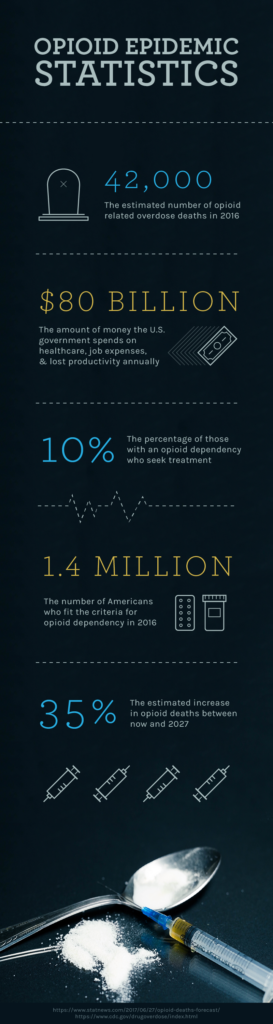
42,000 is a scary number when it comes to opioid epidemic statistics. This is the number of deaths that occurred in 2016 due to opioid use. This number is about five times higher than it was in 1999. Furthermore, experts estimate that about 115 Americans die every day due to opioid use. This can include prescription opioids and heroin. In addition, experts estimate that there will be a 35% increase in deaths between now and 2027. This rise is due to increased availability of synthetic opioids. While synthetic opioids are easier and cheaper to create, they can also be more fatal. As these drugs become more available, the number of deaths will continue to rise.
Government Money Spent on Opioid Use
$80 billion is another shocking number when it comes to opioid epidemic statistics. This figure is the amount of money the U.S. government spends annually due to opioids. It includes loss of productivity, overall healthcare, and job expenses. So how does this break down?
Loss of productivity means employers are losing money in a number of ways. For example, an employee being absent due to opiod use means less production for employers. Paying for disability and sick days are another way employers lose money. They also lose money in productivity when employee performance suffers. Healthcare expenses include substance abuse treatments, research costs, and hospital expenses.
Opioid Dependency
During 2016, about 1.4 million Americans fit the criteria for opioid dependency. However, only 10% of them sought out addiction treatment programs. It’s painful that the smallest number of opioid epidemic statistics is the percentage of those receiving help. Why is this occurring? Many users are unsure of where to go, what kind of treatment they need, or how to afford treatment.
Don’t Become a Statistic
At Driftwood Recovery, our prescription drug addiction rehab aims to lower these opioid epidemic statistics. We offer a variety of services to help users successfully find their path to recovery. Our services include the following:
- Acceptance and commitment therapy
- Dual diagnosis treatment
- Eye movement desensitization and reprocessing
- Cognitive behavioral therapy
- Dialectical behavioral therapy
Refuse to become a number in a news article, and begin treatment today. Call us today at 866-426-4694.
Although many people develop dependence on drugs or alcohol due to trauma, everyone has a unique history. Additionally, some people struggle with addiction as a result of mental illness symptoms. Therefore, the right rehab approach should include individualized addiction treatment. This gives people the best chance of reaching successful recovery.
Benefits of Individualized Addiction Treatment
You have your own history that contributes to your addiction. Therefore, there’s no one-size-fits-all approach to treatment.
The professionals at a quality facility work to customize a treatment plan that addresses your core issues. Without this individual approach, it’s harder to set a firm foundation for recovery.
By tailoring treatment to you, skilled therapists and other personnel make sure your physical, emotional, and spiritual needs are met. For example, if you have an anxiety disorder, you won’t necessarily benefit from the same treatment that someone who doesn’t struggle with anxiety receives.
Personalized plans bring additional support to your recovery needs. This could be the first time in your life that you feel this way. Imagine how much more invested in recovery you’ll be when you feel comfortable and safe.
Additionally, custom detox methods and individual therapy that focuses on a person’s unique stressors and triggers lessens the chances of relapse. For example, a veteran with PTSD issues has vastly different triggers than a suburbanite dependent on prescription medication. By treating them as individuals, each receives the right care.
How to Get the Most Benefits of Individualized Treatment
Being completely honest with yourself is crucial while you go through rehab. This gives the staff the necessary information to customize treatment specifically for you. By leaving out details—even ones you think aren’t important—you might miss out program components that are crucial to your sobriety.
It can be hard laying out all that information. But remember, the staff at an addiction treatment center is familiar with every type of behavior that people with substance dependency engage in. Overall, they’re very caring and have an overwhelming desire to help you. Therefore, you should always be honest with them about everything.
With an individualized addiction treatment plan in place, all of your unique problems are taken into account. Thus, you’ll receive the right care and have a much better chance at long-term sobriety.
A New Start Awaits at Driftwood Recovery
We believe that life begins again during recovery. We’re an addiction and pain rehab center in Driftwood, Texas, sitting on 85 acres of serene ranch land. In addition, our facility provides various treatment models, including residential, intensive outpatient, and partial hospitalization programs. The addiction therapies we offer include:
- Psychotherapy
- Group therapy
- Behavioral therapy
- Family therapy
- Trauma therapy
Recovery is a courageous decision that only you can make. Overcome your addiction with our help. Contact us today, and we’ll put you on the right path to recovery: 866-426-4694.
While choosing a rehab program, you’ll face one major decision: Inpatient vs outpatient. Ultimately, both options offer similar treatment and support. However, there are notable differences between them. Take a look at your recovery options and decide whether inpatient or outpatient is right for you.
Accommodation
The biggest difference between inpatient vs outpatient care is where Clients sleep each night. For example, in an inpatient program, Clients can expect 24/7 care. This means from morning to night, they’re on the premises under staff supervision. Additionally, this includes meals and sleep, so staff shows each Client the proper accommodation.
Conversely, in outpatient programs, Clients don’t spend the night. Instead, they head home every evening to be with family members. While each day still has structure and routine, they’ll have access to the familiar comforts of home.
24/7 Support System
Both inpatient and outpatient programs are beneficial. Ultimately, the right choice depends on your current support system. Outpatient programs are usually best for those who already have a trustworthy support system.
For example, a young adult might be able to stay with their parents each night. If the parents are committed to recovery, then they act as major support for their struggling teen. However, a person living alone might not want to risk attending an outpatient program. Thus, having the 24/7 support of inpatient care could be a better option for them.
Reduced Relapse Risks
Addiction recovery is complex. There are ups and downs, and inherent struggles. Relapse is a significant obstacle and some Clients have already had trouble with this. If you or your loved one suffered a relapse, then committing to inpatient care might be best.
Overall, inpatient care is more intensive and gives Clients a better chance of reaching lasting success. If outpatient care didn’t work for you, it makes sense to commit to the 24/7 accountability, structure, and support inpatient programs provide.
Flexibility
In many ways, inpatient drug rehab is an excellent choice. However, it lacks the flexibility of outpatient care. Many Clients want to continue their education, careers, or family responsibilities during rehab. In these cases, the flexibility of outpatient care allows for more personal freedom.
Inpatient vs Outpatient at Driftwood Recovery
At Driftwood Recovery, incoming Clients choose from a variety of comprehensive recovery programs. Inpatient rehab, intensive outpatient programs, and partial hospitalization programs are all viable options to consider. These programs offer diverse treatment methods and an emphasis on lasting sobriety. The treatments you’ll have access to during your stay include:
- Yoga therapy
- Trauma therapy
- Cognitive behavioral therapy
- Dialectical behavioral therapy
- Group therapy
Both inpatient and outpatient programs are effective rehab options. Regardless, at Driftwood Recovery in Texas, Clients look forward to comprehensive and holistic care. Call 866-426-4694 today if you’re ready to permanently overcome your addiction.Contact Us
In the United States, there are multiple debates surrounding addiction. Overall, alcoholism is a national crisis. Therefore, you might wonder is alcoholism a disease. By understanding alcoholism as a disease, many struggling users are more optimistic about rehabilitation. Let’s explore how alcoholism affects millions of Americans, and the steps to seeking the proper addiction treatment.
Is Alcoholism a Disease?
The NIAAA is an organization for researching alcoholism. Alongside NIDA, both entities spend their time and resources studying addiction. Both entities define a disease as a chronic and progressive illness that affects a specific organ with diagnosable symptoms. Recently, using modern technology like fMRI brain scans, we’re able to conclude that addiction is, in fact, a disease.
Studies show that an individual with an alcohol addiction has brain functioning much different than the average person’s. This is because addiction takes over the brain’s mental pathways responsible for pleasure. In order to survive, we need pleasure-seeking habits. This is what tells us to eat, sleep, and reproduce. However, those struggling with alcoholism have a dysfunctional prefrontal cortex, the area which houses the brain’s reward system.
This area of the brain’s additional responsibilities also explain the problematic behaviors of someone with alcoholism. These responsibilities include:
- Emotional regulation
- Impulse control
- Self-awareness
- Logical decision making
Can You Treat Alcoholism?
Fortunately, treatment has become much better over the years because of the additional studies surrounding addiction. Since we have an understanding of how addiction affects the brain, there are new treatment methods that focus on correcting problematic behaviors and thought processes. High-quality treatment centers successfully employ these methods with a full grasp of the disease’s many effects.
Treatment for Alcoholism
Driftwood Recovery is an addiction recovery center in Driftwood, Texas. We’re here to help you overcome your alcoholism with our comprehensive, evidence-based treatment methods, and 12 Step programs. Our goal is to provide you with the necessary tools to create a strong foundation for recovery and continued success. We offer the following levels of care to ensure that your courageous decision to seek treatment is the right one:
Our facility is located on 85 acres of beautiful ranch land in a tranquil environment ideal for lasting recovery. To renew your life for the better, call us today at 866-426-4694.
Contact us

Break the cycle of suffering through surrender.
Contact Driftwood Recovery today to get more information or schedule a tour.